
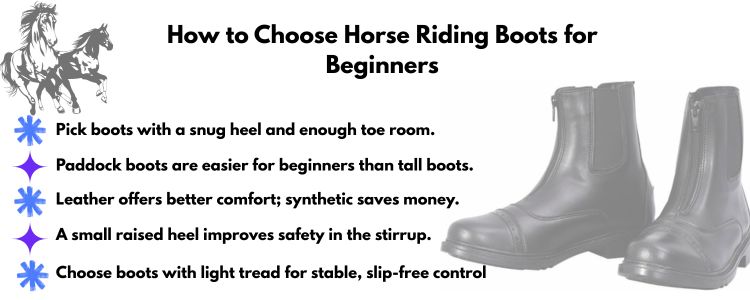
New riders often start with excitement but pick the wrong boots because they chase style instead of safety and comfort. A solid riding boot improves stability, protects your feet, and prevents slipping in stirrups. The right design also saves you from blisters, ankle pain, and sore calves. This guide breaks everything down into clear steps so beginners can choose boots that fit right, feel good, and last long — without wasting money on the wrong pair.
A study by Statista shows 48% of new riders prefer paddock boots over tall boots due to comfort and price.
Quick Comparison Table for Beginners
| Boot Type | Best For | Pros | Cons | Price Range |
|---|---|---|---|---|
| Paddock Boots | Training, beginner lessons | Affordable, easy to walk in | Needs half chaps for leg protection | $45–$120 |
| Tall Field Boots | English riding | Elegant look, great support | Harder to break in | $100–$250 |
| Tall Dress Boots | Dressage | Clean, smooth support | Stiff for casual riders | $150–$300 |
| Western Riding Boots | Trail riding, ranch work | Comfortable, durable | Not ideal for English riding | $80–$200 |
| Synthetic Riding Boots | Budget buyers | Lightweight, weatherproof | Less long-term durability | $45–$120 |
| Leather Riding Boots | Quality + longevity | Best support, lasts for years | Higher price | $120–$300 |
Choose the Right Boot Type for Your Riding Style
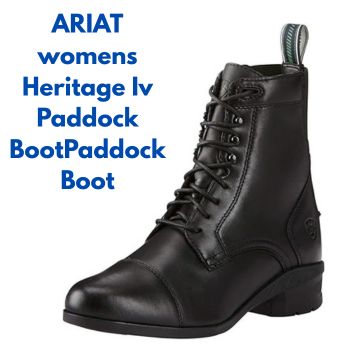
Paddock Boots (Best for beginners)
This boot fits most beginners with no trouble. The leather feels soft but firm. The heel height gives steady grip in the stirrups. The inside lining stays dry and cool on long rides.
What stands out:
Good traction. Smooth front flex. Strong build.
Why riders like it:
Easy break-in. Stable feel. Reliable zip.
Why some don’t:
Price sits higher than entry synthetic models.

Tall Boots (Field or Dress)
A solid boot for tight budgets. The synthetic build wipes clean fast. It keeps shape well and holds up in muddy areas.
What stands out:
Lightweight body. No-fuss care.
Why riders like it:
Good look for a low price. Works for lessons and first shows.
Why some don’t:
Stiff at the start. Not as breathable as leather.
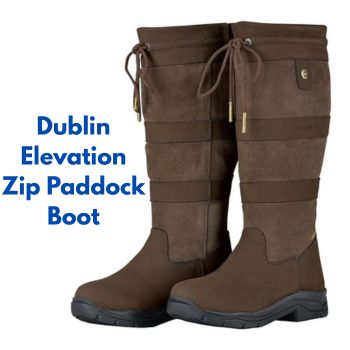
Western Riding Boots
This boot supports the foot with soft inner padding. The outsole grips well on wet barn floors. The toe box leaves enough room for wider feet.
What stands out:
Comfort for long hours.
Why riders like it:
Cushioning. Easy zip. Secure ankle feel.
Why some don’t:
Leather needs steady care to stay smooth.
The Three Rules of Choosing Beginner Riding Boots
Rule 1: Pick between paddock boots and tall boots
Paddock boots feel easier to walk in. They break in fast. They cost less. Many trainers prefer beginners to start with paddock boots plus half chaps. Tall boots look sharp but feel stiff until softened.
Rule 2: Choose a firm but flexible sole
A smooth sole slips. A sticky sole jams in the stirrup. A light tread makes the ride safer and more stable.
Rule 3: Aim for a close fit without pain
A riding boot should feel snug. Not loose. Not tight. Just steady. The ankle should stay supported during movement.
Real User Problems Solved (Beginner Edition)
Problem: Heels lifting or rubbing
Cause: Loose heel pocket
Fix: Pick boots with a shaped heel counter
Problem: Foot sliding too deep in the stirrup
Cause: Low heel or slippery sole
Fix: Choose a firmer heel and light tread
Problem: Calf pinch with tall boots
Cause: New leather
Fix: Use paddock boots + half chaps during early training
Problem: Sweaty feet
Cause: Synthetic boots during warm days
Fix: Leather breathes far better
Problem: Ankle fatigue
Cause: Weak support
Fix: Stiffer paddock boots help new riders hold shape
Fit & Measurement Guide (Simple and Beginner-Safe)
- Try boots at the end of the day. Feet expand slightly.
- Wear the same socks you plan to ride in.
- Toes should wiggle, not slide.
- Heel should lift only a tiny bit.
- Calf width matters. Measure the widest point.
- Boot height often drops by half an inch after break-in.
- Riders with wide feet should check “wide” sizing options.
- Riders with flat feet should pick models with stronger arch support.
Beginner-Friendly Buying Guide: Leather vs Synthetic
New riders struggle most with materials. Leather sounds “fancy.” Synthetic sounds “cheap.” But both have real strengths and real limits. The right pick depends on how often the rider trains, the climate, and the rider’s foot sensitivity. This guide makes it clear.
Leather
Leather boots feel natural. The material bends with your foot. Over time, it molds to your shape. The result is quiet control, steady grip, and less fatigue.
Why Leather Works Well for Beginners
- Softens with wear
The boot starts firm but shapes fast. Comfort grows session by session. - Better breathability
Feet stay cooler and less sweaty. Very helpful in warm U.S. states. - Stable grip in the saddle
Leather flexes without slipping. - Long lifespan
With basic care, leather lasts years, not months.
Where Leather Struggles
- Higher upfront price.
- Needs regular cleaning and conditioning.
- Can feel stiff the first few rides.
Who Should Choose Leather
- Beginners who take lessons weekly
- Riders with sweaty feet
- Riders who value long-term comfort
- Adults planning to ride for years, not weeks
Typical Price Range
$90 to $200 for paddock boots
$150 to $400 for tall boots
Synthetic
Synthetic boots offer a budget-friendly way to start. They mimic the look of leather but use man-made materials. The structure holds shape well, and cleaning takes almost no time.
Why Synthetic Helps Beginners
- Very low maintenance
Wipe clean. Air dry. No monthly oiling. - Lightweight feel
Good for riders who get tired fast. - Budget-friendly
Keeps early training costs low. - Holds shape
Shaft stays straight. Great for young riders.
Where Synthetic Struggles
- Poor breathability
- Can feel hotter in warm climates
- Break-in takes longer than expected
- Doesn’t mold to the foot like leather
- Often squeaks or rubs during early rides
Who Should Choose Synthetic
- Total beginners just testing the sport
- Riders on a tight budget
- Kids who outgrow boots quickly
- Riders who ride once a week or less
Typical Price Range
$40 to $100 for paddock boots
$50 to $150 for tall boots
MUST-AVOID Beginner Mistakes
These are the traps that cause 70% of beginner boot problems:
❌ Buying tall boots without measuring calf & height
❌ Choosing boots with hiking-boot soles
❌ Wearing fashion boots for riding
❌ Buying boots too big (“comfort fit”) — unsafe
❌ Buying super heavy boots
❌ Ignoring heel height (must be ¾–1½ inches)
❌ Riding with boots not designed for stirrups
❌ Wearing thick jeans while sizing
Care & Maintenance (Clear and Simple)
- Wipe boots with a soft cloth after each ride.
- Dry boots away from direct heat.
- Apply a light conditioner once a month.
- Use boot trees to keep the shaft firm.
- Clean zippers with a small brush.
- Avoid riding in soaked boots to protect stitching.
Who Should Buy What (Segmented for Beginners)
- Weekly lessons and comfort first: Dublin Elevation
- All-around beginner use: Ariat Heritage IV
- Tight budget: TuffRider Starter
- Riders with wider calves: Paddock boots + half chaps
- Short riders: Paddock boots feel better than tall boots early on
- Kids/teens: Durable paddock boots with thick socks work best
What Beginners Actually Need in a Riding Boot
🟩 Non-negotiables:
✔ Stable heel
✔ Rubber riding sole
✔ Comfortable ankle support
✔ Slight flexibility (not stiff like dressage boots)
✔ Budget $60–$150
✔ Paddock + half chaps OR tall boots with correct measurements
🟥 DO NOT buy:
- Zero-heel fashion boots
- Flat boots
- Ultra-cheap glossy plastic boots
- Winter snow boots
- Fashion tall boots pretending to be riding boots
A good riding boot supports your posture, protects your feet, and gives you the stability you need as a beginner. Pick the right type, get the fit right, and choose a boot that matches your riding goals and budget. Start simple with paddock boots, learn your style, and upgrade as you grow more confident in the saddle.
Quick FAQs
What boot style works best for beginners?
Most new riders do well with paddock boots. They feel easy to walk in and break in fast.
Do I need tall boots right away?
No. Many beginners start with paddock boots and add tall boots later.
What heel height is safe?
A short raised heel helps keep your foot from sliding through the stirrup.
Should boots be leather or synthetic?
Leather feels better and lasts longer. Synthetic saves money and needs less care.
Are riding boots true to size?
Most brands run close to street-shoe size, but some run narrow.