
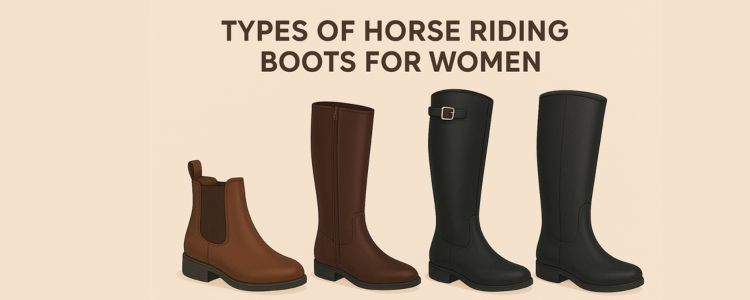
There are many types of horse riding boots, and each one works for different riding styles. If you’re new, it can feel overwhelming—tall boots, paddock boots, field boots, dress boots, Western boots… what do they all mean?
This guide explains every type in simple language so you can choose the right boot for your riding discipline, comfort, and budget.
Quick Overview of Riding Boot Types
| Boot Type | Best For | Height | Beginner-Friendly? |
|---|---|---|---|
| Tall Boots | Dressage, jumping, showing | Knee-high | Medium |
| Field Boots | Jumping, hunters | Knee-high | Yes |
| Dress Boots | Dressage | Knee-high | No |
| Paddock Boots | Lessons, schooling | Ankle-high | Yes |
| Half Chaps + Paddock | Lessons, beginners | Knee-high look | Yes |
| Western Boots | Trail riding, ranch work | Mid-calf | Yes |
| Roper Boots | Western riding | Mid-calf | Yes |
Now let’s break each type down clearly.
1. Tall Riding Boots (English Style)
Tall boots are the classic English riding boots you see in dressage, jumping, and shows. They reach up to just below the knee.
Women’s tall boots come in three main sub-types:
A. Field Boots (Lace-Up Ankle)
- Softest and most flexible tall boots
- Laces at the ankle
- Easy to break in
- Comfortable for jumping and everyday lessons
Best for:
Jumping
Hunter/Jumper
Beginner English riders
Why riders love them:
The ankle laces give more flexibility when posting or jumping.
B. Dress Boots (No Laces, Stiffer Shaft)
- Plain front with no laces
- Stiffer leather
- Sleek and formal look
Best for:
Dressage
Advanced riders
Showing
Why riders choose them:
The stiff shaft helps create a quiet, stable leg.
C. Dressage Boots (Extra Stiff)
- Very stiff outer shell
- High Spanish-cut top
- Trained to hold the leg in a fixed position
Best for:
High-level dressage riders
Not ideal for beginners because they are harder to break in.
2. Paddock Boots (Short Boots)
Paddock boots reach just above the ankle and are the easiest boots for women to start with.
Why beginners love them:
- Comfortable
- Affordable
- Easy to walk in
- Easy to break in
- Good for lessons
- Work with half chaps
Best for:
Riding lessons
Schooling
Kids or adult beginners
People who want comfort first
Paddock boots can be leather or synthetic.
3. Half Chaps + Paddock Boots Combo
This combo is the most popular choice for beginners.
How it works:
- Wear paddock boots on your feet
- Wear half chaps from ankle to knee
- Together they look and act like tall boots
Why this combination is amazing:
- Cheaper than tall boots
- Replaceable parts (buy new chaps instead of full boots)
- More flexible and comfortable
- Perfect for early training
Best for:
English riding lessons
New riders
Adults returning to riding
Everyday schooling
You get nearly all the benefits of tall boots without the cost or stiffness.
4. Western Riding Boots
Western riding boots are different from English boots. They look like classic cowboy boots but are made for riding safety.
Western Boots Features
- 1–1.5 inch riding heel
- Smooth sole for sliding out of stirrups
- Taller design than paddock boots
- Durable for ranch and trail use
Best for:
Trail riding
Western pleasure
Ranch work
Casual riding
Western boots may be leather or synthetic.
5. Roper Boots (Short Western Boots)
Roper boots are a type of Western boot, but shorter, lighter, and easier to ride with.
Roper Features:
- Shorter shaft
- Rounded toe
- Lower heel
- More flexible than classic Western boots
Best for:
Beginners riding Western
Daily barn work
Long hours on your feet
Many women prefer roper boots for comfort over traditional cowboy boots.
6. Differences Between English and Western Riding Boots
Here’s a simple breakdown:
English Boots
- Slim and tall
- Designed for close leg contact
- Used for jumping, dressage, eventing
- Usually leather
- More structured fit
Good for:
Lessons
Competitions
Arena riding
Western Boots
- Shorter or mid-calf
- Wider foot and sole
- Good for long trail rides
- Durable and tougher
- More flexible
Good for:
Trails
Ranch work
Recreational riding
7. Which Riding Boot Type Should Women Choose?
Your boot choice depends on your riding discipline and experience.
If You’re a Beginner
Go with:
➡ Paddock boots + half chaps
OR
➡ Western roper boots (if riding Western)
If You Ride English
Choose:
Field boots (if jumping)
Dress boots (for dressage)
Paddock boots for daily lessons
If You Ride Western
Choose:
Western boots
Roper boots (if you prefer more comfort)
If You Ride Trails or Outdoors Often
Choose:
Western boots
Waterproof paddock boots
Roper boots for long hours
8. Leather vs Synthetic Riding Boots
Both materials have advantages. Here’s the quick breakdown:
Leather Boots
✔ Long-lasting
✔ Mold to your leg
✔ Strong and safe
✔ Classic look
❌ Higher price
❌ Need care and cleaning
Synthetic Boots
✔ Cheaper
✔ Lightweight
✔ Easy to clean
❌ Less durable
❌ Limited stretch
❌ May not look as polished
Beginners can start with synthetic.
Intermediate riders usually upgrade to leather.
9. Zipper vs Pull-On Riding Boots
Most tall boots today have zippers.
Zipper Boots
- Easy to put on
- Common in modern tall boots
- Good for beginners
Pull-On Boots
- No zipper problems
- Harder to put on
- Often traditional style
Choose zippers unless you prefer tradition.
10. Which Riding Boots Last the Longest?
Durability ranking:
- High-quality leather tall boots
- Leather paddock boots
- Western roper boots
- Synthetic boots
Synthetic boots wear out fastest, but they’re great for entry-level riding.
11. Boot Types You Should Avoid as a Beginner
Fashion boots
Snow boots
Combat boots
Work boots without a safe heel
Flat-soled boots
Wide cowboy boots with huge heels
These are unsafe and not designed for riding.
FAQs
1. Which riding boots should beginners start with?
Paddock boots + half chaps are the best beginner setup.
2. Are tall boots required?
Not for beginners. They’re mainly used for advanced lessons and showing.
3. Are Western boots safe for English riding?
They’re safe, but not ideal. English boots give better leg support.
4. What’s the simplest boot option for women new to riding?
Short paddock boots — comfortable, safe, and affordable.
5. Do I need half chaps with paddock boots?
Yes, if riding English. They protect your leg and improve grip.