
If you’re new to horse riding, figuring out how women’s riding boots should fit can feel confusing. Should they be tight? How tall should they be? How much heel slip is normal?
This guide explains everything in simple, clear steps so you can choose boots that feel good, stay safe, and support you while riding.
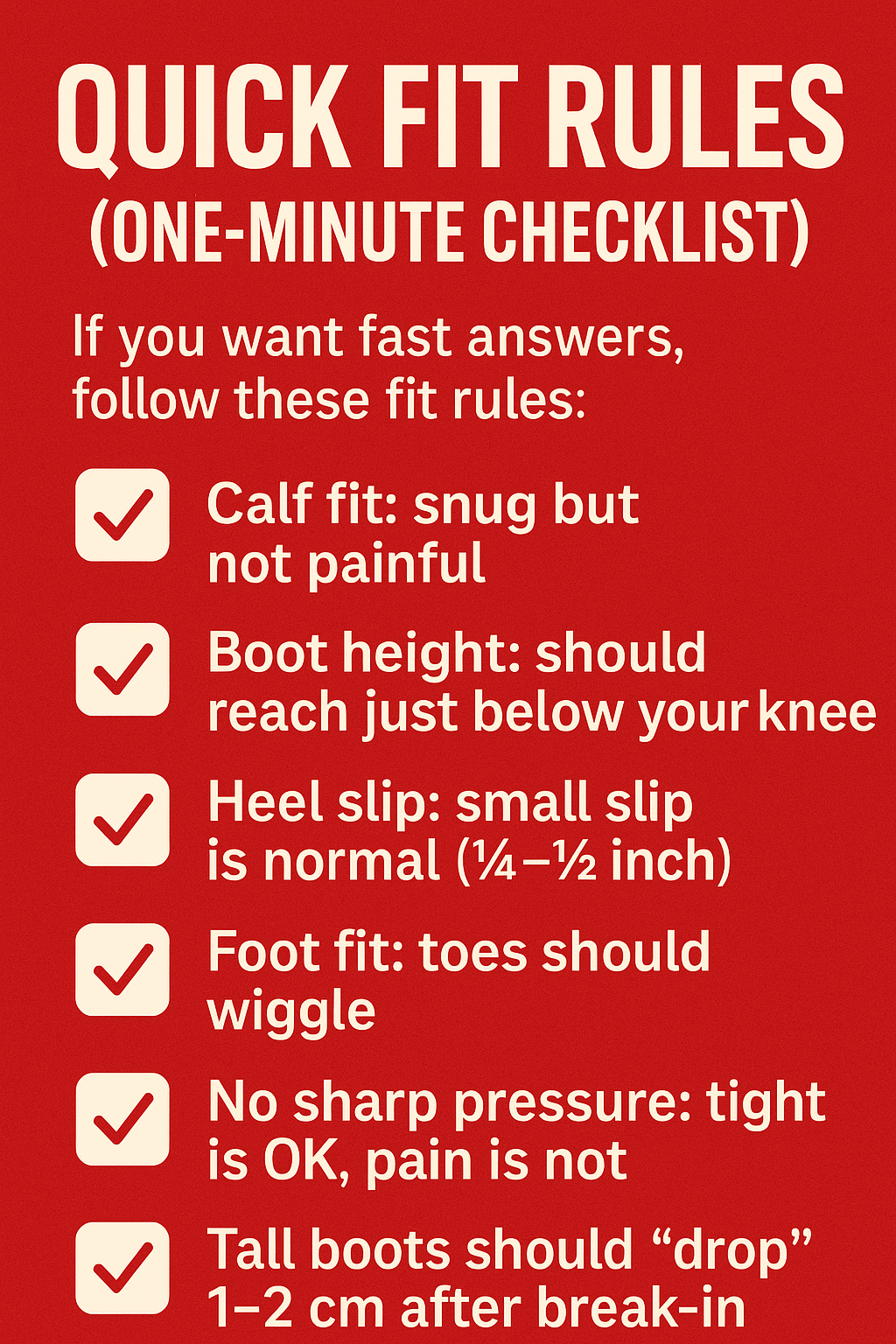
Quick Fit Rules (One-Minute Checklist)
If you want fast answers, follow these fit rules:
Now let’s go deeper.
1. The Ideal Fit for Riding Boots
Women’s riding boots should feel secure, supportive, and slightly snug, especially around the calves. But they should NOT cause sharp pain.
Snug Calf Fit
Riding boots are designed to follow the shape of your lower leg.
They should feel tight when new—this is normal.
Good signs:
- You can zip them up without force
- They hug your calf without pain
- No loose gapping at the top
Bad signs:
- You need help pulling the zipper
- Your calf burns or goes numb
- The zipper strains or feels ready to break
👉 Tip: Leather stretches slightly as you ride. Synthetic boots stretch very little.
2. Checking Boot Height (Most Women Get This Wrong)
Boot height matters. If boots are too short, they look sloppy and feel loose.
If they’re too tall, they dig into the back of your knee.
Correct Height
Your tall boots should reach:
Up to the crease behind your knee when new.
After break-in, they drop down 1–2 cm and settle at a perfect height.
What “too tall” looks like:
- Pain behind the knee
- Skin pinching
- Hard to bend your knee
- Ankles feel stiff or “pulled up”
What “too short” looks like:
- Boot ends several inches below knee
- Loose top
- Less leg support while riding
- Doesn’t look like a proper tall boot
3. Foot Fit: Roomy Toes + Snug Midfoot
Your foot should feel comfortable and secure.
Toe Box Fit
You should have:
- Wiggle room for toes
- No hard pressure on the big toe
- No numbness
If your toes are touching the front, size up.
Midfoot Fit
This part should feel firm and supportive.
Avoid boots that feel:
❌ Too tight across the top
❌ Too loose and sloppy
❌ Hollow under the arch
Heel Slip
A little heel movement = GOOD.
Normal slip amount:
➡ ¼ to ½ inch
Why heel slip happens:
- New boots are stiff
- Leather hasn’t flexed
- Zippers hold the ankle straight
As boots break in, heel slip decreases.
4. Fit Differences by Boot Type
Not all riding boots fit the same way. Here’s what you should know:
A. Tall Riding Boots (English)
These should feel more snug than regular boots.
Fit rules:
- Snug calves
- Slightly tall at first
- Small heel slip
- Zipper should glide easily
Tall boots often feel “too tight” the first few rides.
This is normal — they soften and shape to your leg.
B. Paddock Boots (Short Boots)
Fit similar to regular walking boots, but with more structure.
Fit rules:
- Foot should feel secure
- Slight ankle flexibility
- No painful rubbing
- Works best with half chaps
Paddock boots are the easiest to size correctly.
C. Half Chaps + Paddock Combo
This combo mimics tall boots but is more forgiving.
Fit rules for chaps:
- Snug but zip up easily
- Should not twist around your calf
- Should reach just below the knee
Half chaps stretch quickly, so buy them slightly tight.
5. Signs Your Riding Boots Don’t Fit
Here’s how to know if you picked the wrong size:
- Pain Behind the Knee: Boots are too tall.
- Numb Toes: Foot area is too tight.
- Calf Pain or Red Marks: Boot is too narrow.
- Boot Twisting Around Your Leg: Calf is too wide.
- Constant Heel Blisters: Boot is too loose in the heel.
- You Can’t Zip Them Alone: Calf too tight OR ankle too tall.
6. Wide Calf vs Regular Calf vs Slim Calf Fit
Women’s legs vary—riding boot brands know this.
That’s why boots come in:
- Slim calf
- Regular calf
- Wide calf
How to know your calf type:
| Calf Width | What It Means |
|---|---|
| Slim | The boot feels loose around calves |
| Regular | Snug but comfortable fit |
| Wide | Boot feels tight or won’t zip |
Always measure your calf while sitting with feet flat.
7. Breaking in Riding Boots (What to Expect)
Riding boot break-in time:
➡ 5–10 rides
During break-in:
- Calves loosen slightly
- Leather softens
- Heel slip decreases
- Boot height drops a little
Normal feelings:
- Stiffness
- Light calf pressure
- Tight ankle flex
NOT normal:
- Sharp pain
- Cut-like marks
- Zipper strain
- Foot numbness
8. Fit Differences by Brand (Important!)
Different brands fit differently.
Here’s the quick guide:
Ariat
- Wider toe box
- Good for wide feet
- Soft leather
- Easy break-in
TuffRider
- Budget-friendly
- Slightly narrow calf
- Great for beginners
Dublin
- True-to-size
- Medium-width calves
- Good arch support
Mountain Horse
- Best for winter
- Bulkier fit
- Warm and durable
Choose the brand that matches your calf and foot shape.
9. How Riding Boots Should Feel When You Ride
When riding, your boots should feel:
- Supportive
- Stable
- Comfortable
- Easy to flex
- Secure around the ankle
Proper fit helps your heels stay down and legs stay quiet.
If you feel unstable, the fit is wrong.
10. When to Replace Riding Boots
Replace boots when:
- Leather cracks deeply
- Zipper breaks often
- Soles lose traction
- Calf becomes too loose
- Boot height drops too much
Most riding boots last 1–3 years depending on use.
FAQs
1. Should riding boots feel tight at first?
Yes — a little tightness is normal. They stretch after a few rides.
2. How much heel slip is normal?
¼–½ inch is normal. More than that means the boot is too big.
3. Should boots hit the back of my knee?
When new, yes — lightly. Painful pressure means they’re too tall.
4. Should I size up or down?
For leather: stay true to size.
For synthetic: size up if between sizes.
5. Can riding boots be stretched?
Leather can stretch slightly. Synthetic rarely stretches.