
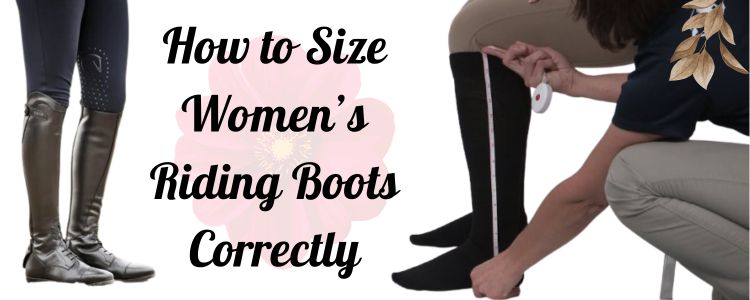
Sizing women’s riding boots correctly is one of the most important steps for comfort and safety. A great pair of riding boots should fit your foot, calf, and leg height properly. But many beginners buy the wrong size because they guess instead of measuring.
This guide breaks everything down into simple steps so you get a perfect fit on your first try.
Quick Sizing Checklist (Fast Answer)
If you need a quick reference:
- Measure your foot length (shoe size)
- Measure calf width at the widest point
- Measure boot height from floor to knee crease
- Compare to brand size chart
- Choose wide, regular, or slim calf as needed
- Tall boots should feel slightly tall when new
- Leather boots will stretch; synthetic boots won’t
Now let’s go deeper.
1. Start by Measuring Your Foot Size (Easy Step)
Your foot size is the simplest part of the process.
How to measure foot length:
- Stand on a sheet of paper.
- Trace your foot.
- Measure from heel to longest toe.
- Compare with your normal shoe size.
Tip: Riding boots usually match your everyday shoe size.
If between sizes → choose ½ size up.
2. Measure Your Calf Width (Most Important for Tall Boots)
This is the step most women skip—don’t!
Correct calf measurement prevents:
- Tight pain points
- Zippers breaking
- Gapping at the top
- Boots twisting around your leg
How to measure calf width:
- Sit in a chair with feet flat.
- Place your leg straight at a 90-degree angle.
- Wrap a tape measure around the widest part of your calf.
- Don’t squeeze the tape—keep it snug.
- Do this for both legs. Choose the larger measurement.
Example:
- Right calf: 14 inches
- Left calf: 14.5 inches
➡ Pick a 14.5-inch boot width.
Calf Width Guide for Women
| Calf Type | Measurement Range |
|---|---|
| Slim Calf | 12″–13.5″ |
| Regular Calf | 13.5″–15″ |
| Wide Calf | 15″–17″+ |
| (Varies by brand — always check charts.) |
3. Measure Boot Height (Floor → Knee Crease)
Tall riding boots must have the right height, or they will hurt or look sloppy.
Boot height should reach:
➡ Just below the crease behind your knee
How to measure height:
- Sit or stand naturally.
- Keep the tape at the floor.
- Measure straight up to the back of your knee crease.
- That number is your boot height.
Example:
Your measurement = 17 inches
Tall boots to choose = around 17–18 inches (they drop after break-in)
4. Understand Boot “Drop” (Important for Tall Boots)
Tall riding boots stretch and drop over time.
This is normal and expected.
Drop range:
- Leather boots: ¾ inch to 1 inch
- Stiff dressage boots: ½ inch
- Synthetic boots: minimal drop
This means:
When new, boots should feel slightly tall.
If they dig painfully behind your knee → too tall.
5. Choosing Between Slim, Regular, and Wide Calf Sizes
Women come in different calf shapes → so do boots.
Brands offer calf widths like:
- Slim (S)
- Regular (R)
- Wide (W)
- Extra-Wide (XW)
Pick the calf width based on your measurement:
If your calf is 15 inches and the chart says:
- Regular: up to 14.5 inches
- Wide: 15–16 inches
➡ Pick Wide.
Choosing too narrow leads to pain.
Choosing too wide leads to twisting and slipping.
6. Try-On Fit: What You Should Feel
Once you try them on, here’s how they should feel:
Foot Fit
- Snug but not tight
- Toes can wiggle
- No numbness
- Slight heel slip is normal
Calf Fit
- Snug, firm, supportive
- No sharp pain
- Zipper should close smoothly
- No bulging or folding
Height Fit
- Slight pressure behind knee (normal)
- No cutting or pinching
- Should drop after a few rides
7. Fit Differences by Boot Type
Different riding boots fit in different ways. Here’s what to expect:
A. Tall Boots
- Most structured fit
- Tight calves
- Slightly tall at first
- Heel slip normal
- Hardest break-in period
B. Paddock Boots
- Fit like everyday shoes
- No calf measurement needed
- Great for beginners
- Works with half chaps
C. Half Chaps
- Should zip easily
- Snug against calf
- No twisting
- Should reach just below the knee
D. Western Boots
- Wider toe box
- Lower heel
- Fit more like walking boots
- No calf measurement needed
8. Compare Your Measurements to Brand Size Charts
Each riding boot brand fits differently.
Here’s what you should know:
Ariat
- Great for wide feet
- True-to-size
- Medium to wide calf options
- Soft leather → easier break-in
TuffRider
- Budget-friendly
- Narrower in foot and calf
- Good for slim calves
Dublin
- Balanced sizing
- Good arch support
- Medium-width calves
Mountain Horse
- Great for winter
- Bulkier shape
- Roomier foot and calf fit
9. Common Sizing Mistakes Women Make
Avoid these:
❌ Buying fashion boots instead of real riding boots
❌ Ignoring calf width
❌ Choosing boots that feel “perfect” when new (they must drop)
❌ Buying boots too tall
❌ Not checking return or exchange policies
❌ Choosing synthetic boots expecting them to stretch
Leather = stretches
Synthetic = stays the same
10. When to Size Up vs Size Down
Use this simple rule:
Size Up When:
- Toes feel cramped
- Foot is wide
- You plan to wear winter socks
- You’re between sizes in synthetic boots
Size Down When:
- Heel slip is excessive
- Calf gapping is large
- Boot twists around your leg
- Foot slides forward while riding
11. How to Test the Fit at Home
Before riding, walk around your home for 10–15 minutes.
Check for:
- Calf pressure
- Heel slip stability
- Good ankle flex
- No toe crushing
- Smooth zipper movement
If something feels “wrong” early, it will usually get worse with riding.
12. What to Do If Your Boot Doesn’t Fit
If the fit isn’t right:
- Too tight at calf → choose a wide-calf size
- Too loose at calf → choose slim-calf
- Boot too tall → choose shorter version
- Boot too big in foot → size down
- Boot too small in foot → size up
- Leather stiff → break-in with conditioner
- Synthetic stiff → little can be changed
Don’t keep boots that hurt—return them.
FAQs
1. Should riding boots be tight at first?
Yes. Slight tightness is normal and improves after break-in.
2. Do riding boots stretch?
Leather stretches a little. Synthetic barely stretches.
3. How much heel slip is normal?
¼–½ inch when new.
4. Is calf width more important than foot size?
For tall boots, yes. Wrong calf width = poor fit.
5. Should tall boots touch the back of my knee?
A little pressure is normal. Pain = too tall.